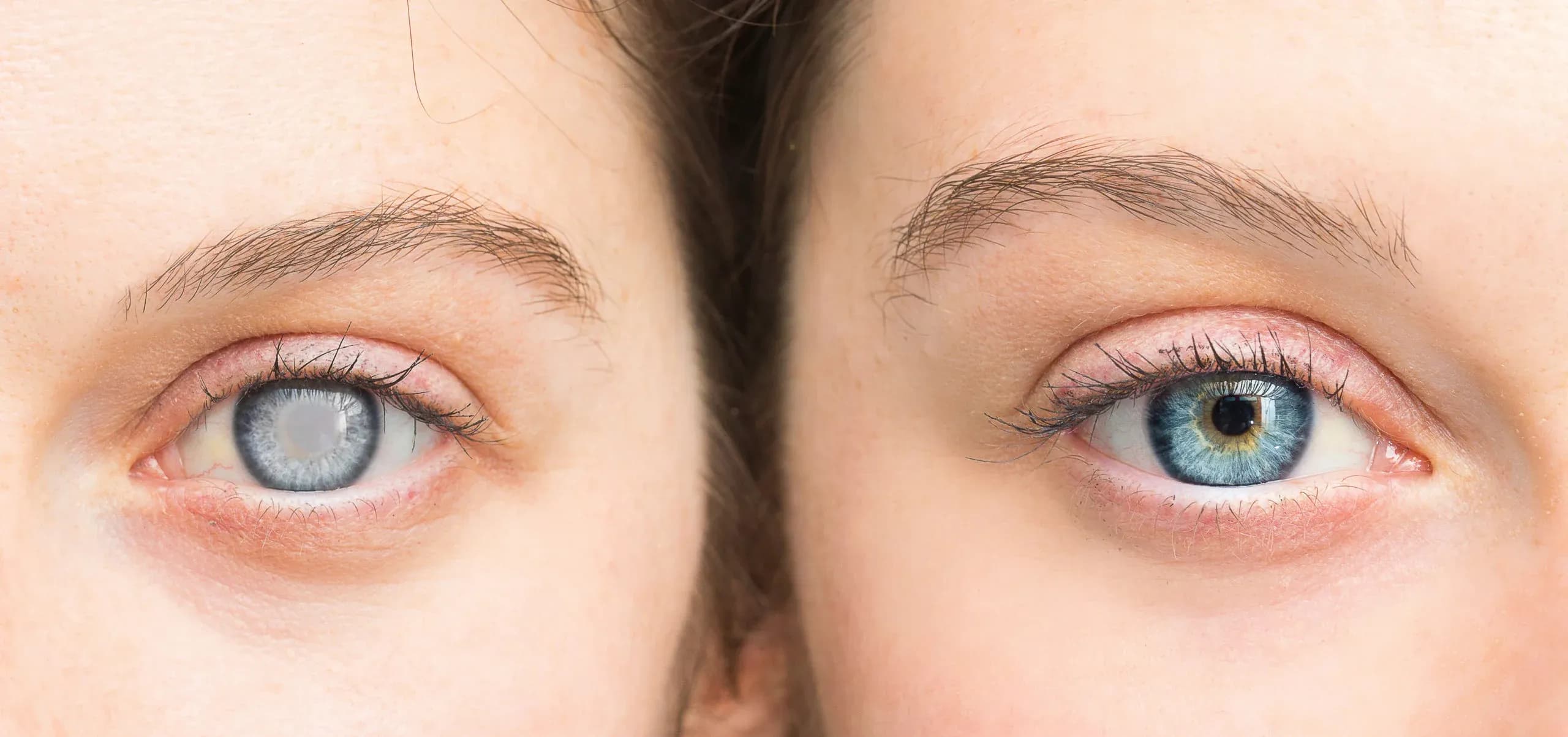
Are you facing difficulty detecting movement or changes in your side vision?
Are you facing difficulty detecting movement or changes in your side vision?Consult a doctor to determine whether you are experiencing glaucoma or cataract symptoms.
Cataracts and glaucoma are two common eye conditions that can affect your vision, but they do so in different ways. Cataract symptoms affect your ability to perform regular activities such as cooking, reading, or driving. Over time, the eye condition worsens, causing vision to become increasingly cloudy and dull.
What are Cataracts?
"Cataract is an eye condition in which the eye lens becomes opaque or cloudy, leading to impaired vision. It mainly develops as a result of age-related changes in the eye lens.
It can also be caused by long-term steroid medicines, eye injury, prolonged exposure to excessive sunlight, and diabetes."
What are the Signs and Symptoms of Cataracts ?
1.Blurry vision
This is the first sign and symptom of cataract. Everything may appear blurry or fuzzy, and it will be hard to see clearly even with contact lenses or glasses.
2.Yellowish or Fading of Colors
Another Cataract symptom is the yellowing or fading of colors. It makes everything the patient sees appear less vibrant.
3.Night Vision Difficulty
Cataract symptoms lead to difficulty in seeing clearly during the night due to increased sensitivity to light. Patients can notice a blur or halos around headlights, streetlights, or any bright light.
4.Double Vision
Sometimes cataract patients experience double vision. It means two distinct images in both eyes and one eye.
5.Changes in Glasses
If you notice that your glasses prescription is changing frequently, it is a sign of cataract. A cataract usually changes the refractive power of the eye, leading to frequent adjustments in vision correction.
6.Depth Perception Problems
Cataracts also affect depth perception, making it difficult for patients to judge distances. This poses a risk when patients engage in activities or drive that require precise accuracy.
Experience exceptional eye care with Hill Country Eye Centre in Texas.
What is Glaucoma ?
Glaucoma is an eye condition that damages the optic nerve and causes irreversible vision loss.
It occurs due to increased pressure inside the eye, weakness of the optic nerve, or blockage of the eye fluid drainage system.
What are the Common Symptoms of Glaucoma?
Glaucoma is a serious eye condition that can lead to vision loss if left untreated.
1.Losing Your Peripheral Vision
One of the earliest signs of glaucoma is a gradual loss of peripheral (side) vision. You might notice it when you're having trouble seeing objects out of the corner of your eye.
2.Eye Pain or Discomfort
Are you experiencing sudden, severe eye pain, redness, blurry vision or nausea? This is a medical emergency that requires immediate treatment for acute glaucoma.
3.Halos around Lights
Halos or rainbows around lights, especially at night, are a common symptom of glaucoma. This occurs due to increased pressure in the eye, causing optical distortions.
4.Headaches
Persistent headaches can be a sign of glaucoma, especially in its later stages. These headaches often come with eye pain or discomfort.
5.Sudden Vision Loss
In some cases, glaucoma can cause sudden vision loss. If this happens, seek medical help right away to prevent permanent damage to the optic nerve.
6.Central Vision Loss
As glaucoma progresses, it can affect your central vision in the growing stage. Thus making everyday tasks like reading or driving challenging.
7.Redness in the Eye
If your eye is red and painful, it could be a sign of elevated intraocular pressure associated with glaucoma.
If you are experiencing any of these symptoms, schedule an eye exam with Hill Country Eye Centre. Early detection and treatment can help preserve your vision.
How are Cataract and Glaucoma Related to Affect Vision?
Glaucoma damages the optic nerve, leading to vision loss, particularly in your peripheral (side) vision. On the other hand, cataracts cloud the lens in your eye, causing blurry or distorted vision.
While both conditions affect vision, the impact is distinct. Cataracts cause overall blurriness and distortion, whereas Glaucoma is a more vision-threatening condition. It is a silent thief of sight as it grows gradually without symptoms, and lost vision cannot be restored.
What are the Treatment Approaches for Cataracts and Glaucoma?
●Treatment Approaches for Cataract
1.A small cut is made, and ultrasound waves are used to break up the cloudy lens. It allows for quick recovery of cataract symptoms and minimal discomfort.
2.At Hill Country Eye Centre, our experts offer extra capsular surgery. A slightly larger incision is made on the upper part of your eye. The cloudy lens is carefully removed, and an intraocular lens (IOL) is inserted to improve your vision.
1.Eye drops are the main medication for Glaucoma. It reduces intraocular pressure and prevents optic nerve damage.
2.Surgery can reduce eye pressure by creating a new drainage channel. Even laser surgery treats glaucoma, lowering eye pressure and improving fluid damage.
How to Prevent Them: Glaucoma and Cataracts?
Detect glaucoma or cataract symptoms early to prevent them from worsening or slow down their growth.
●Regular eye checkups
●Use prescribed eye drops
●Maintain a healthy lifestyle, exercise regularly
●Follow an antioxidant-rich, balanced diet
At Hill Country Eye Centre in Texas, our expert team is here to guide you every step of the way. Call us at 512.528.1144 or visit our website for free quotations and book an appointment. We are here to help you see the world more clearly.